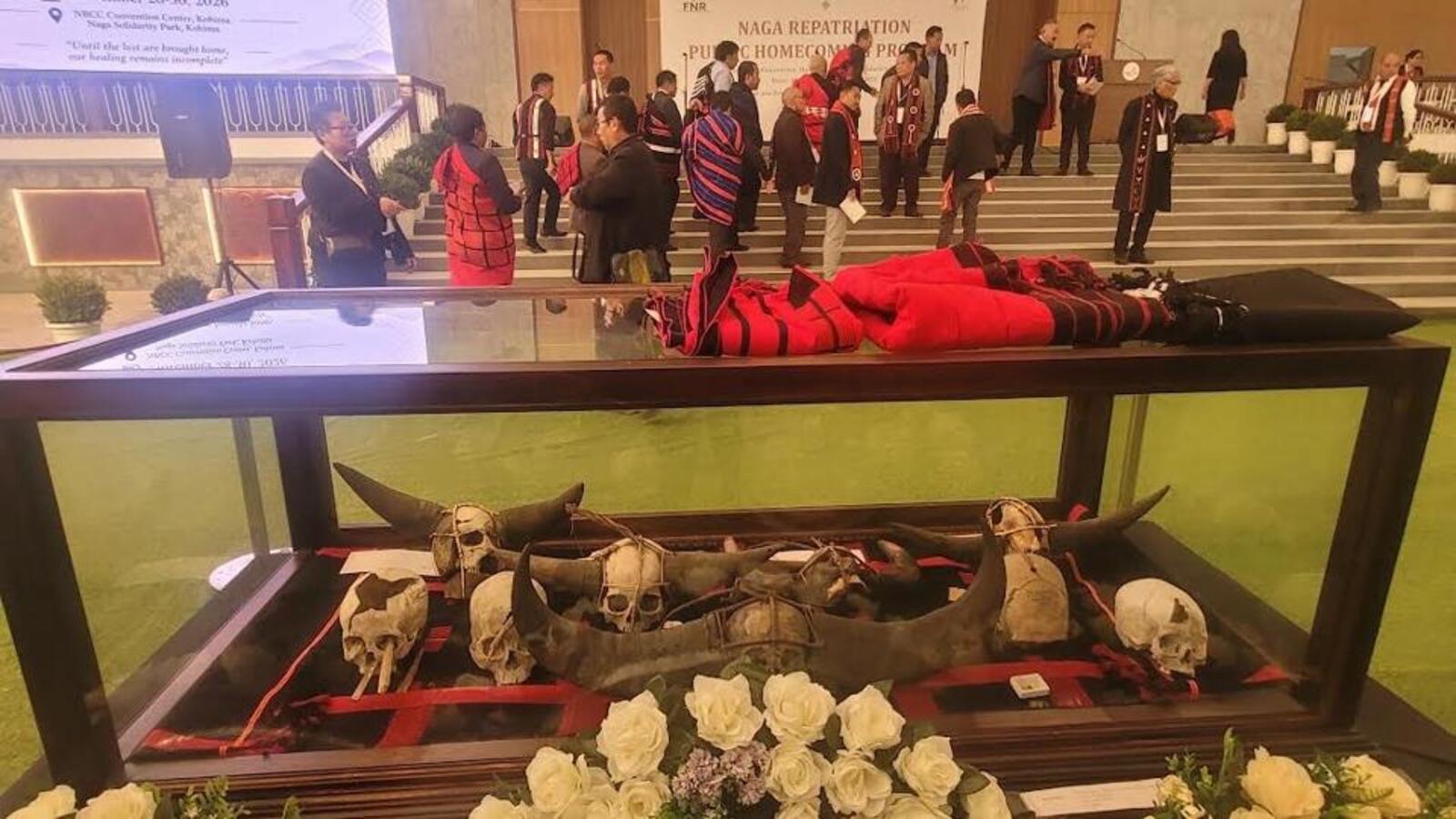
Hundreds of Nagas gathered at the NBCC Convention Centre in Kohima on Saturday to pay their respects to the 39 ancestral human remains repatriated from the United Kingdom, marking the culmination of a six-year endeavor by the Forum for Naga Reconciliation (FNR) and local tribal bodies. The returns signified a significant moment in Nagaland's history, as they represented not only the return of historical remains but also the restoration of a part of their identity, history, and collective memory, according to Chief Minister Neiphiu Rio.
On Saturday, addressing a solemn public homecoming program, Rio emphasized that the journey of these ancestral remains away from their homeland was a painful reminder of a colonial past marked by encounters with foreign powers. He thanked the FNR and its research team, Naga tribes, community leaders, and various Central ministries for their efforts in facilitating this repatriation. Rio acknowledged the importance of dialogue, mutual respect, and shared responsibility in acknowledging and addressing the historical legacy of indigenous communities.
The Nagaland government provided administrative and financial support to facilitate this historic repatriation. Rio expressed gratitude towards several Ministries and departments for their cooperation and understanding, including the Ministry of External Affairs, Department of Customs, Ministry of Environment, Forest and Climate Change, Ministry of Health and Family Welfare, Ministry of Civil Aviation, and the Ministry of Culture, along with the Archaeological Survey of India.
According to FNR convener Rev. Dr Wati Aier, the homecoming was more than just the return of human remains; it was a restoration of dignity and a recognition that every human life bears an identity. He believed that this repatriation would help heal the brokenness of the land, ease the burden of unresolved grief, and liberate the Naga spirit from the lingering trauma of the past. Aier added that healing does not erase history but allows the Nagas to face it truthfully and move forward with hope.
The 39 human remains, believed to belong to members of eight Naga tribes, will be given a dignified burial on November 30 at the Naga Solidarity Park in Kohima. British anthropologists and collectors have donated Naga artifacts, including ancestral human remains, to the Pitt Rivers Museum since its establishment in 1884.