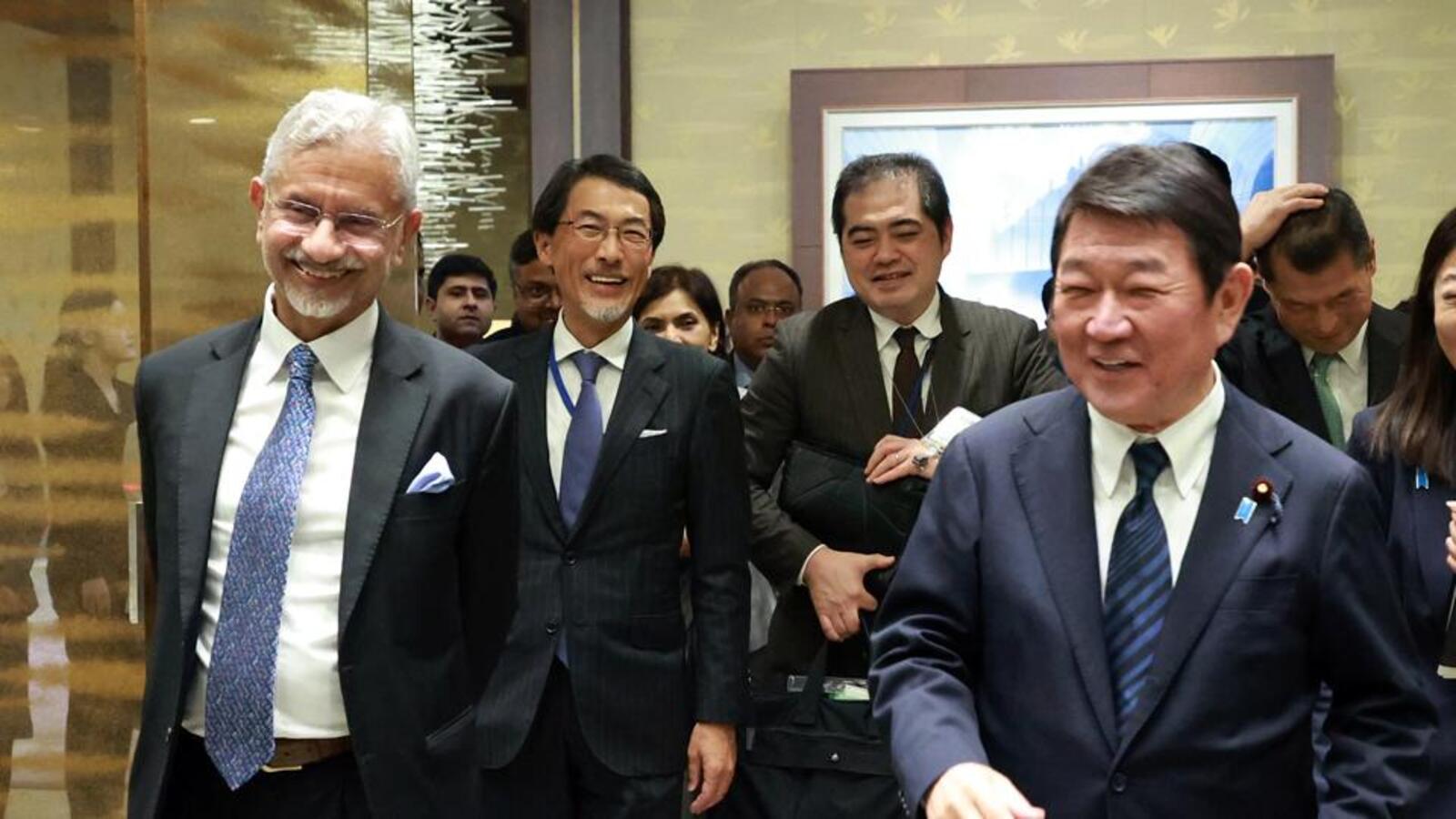
India and Japan pledged to safeguard a free and open international order in an increasingly perilous global security environment during their fourth 2+2 dialogue held in Tokyo on Thursday. The meeting between Indian Defense Minister Rajnath Singh, External Affairs Minister S Jaishankar, and their Japanese counterparts Shinjiro Koizumi and Toshimitsu Motegi resulted in progress towards deepening cooperation on critical areas such as defense, technology, economic security, digital connectivity, and AI systems.
The dialogue led to advancements in efforts to enhance air and space domain awareness, a proposed information-sharing agreement, and collaboration on underwater and missile technologies. The ministers also emphasized the importance of upholding a free and open global order based on the rule of law in an increasingly severe international security environment.
Jaishankar highlighted the increased value of the trusted India-Japan partnership at a time when the world order is grappling with multiple shocks, including two major conflicts, economic volatility, and concerns about energy, trade, food, and health security. Motegi called for both countries to serve as anchors for regional stability, particularly in the Indo-Pacific, as the global security environment becomes increasingly uncertain.
Significant outcomes of the meeting included the decision to expedite coordination for the early realization of a letter of intent (LOI) for the use of India’s firing ranges by Japan's Self-Defense Forces, as well as an agreement to further deepen cooperation in bilateral exercises and strengthen defense industrial cooperation. The ministers also agreed to hold a dialogue between their consular authorities to discuss a range of consular matters and conduct table-top exercises on helping Indian and Japanese nationals abroad.
Under the recently signed memorandum of arrangement on maritime security cooperation, the two sides will focus on concrete outcomes between the Indian Navy and Japan's Maritime Self-Defense Force in areas such as maritime and air domain awareness, search and rescue, and information-sharing. The ministers also agreed to enhance secure and resilient digital connectivity in the Indo-Pacific by cooperating on developing trusted, redundant, and high-speed undersea cable networks and sharing best practices on the security, reliability, and resilience of critical undersea communications infrastructure. Additionally, they agreed to strengthen cybersecurity cooperation, including in AI-enabled cybersecurity and the security of AI systems.