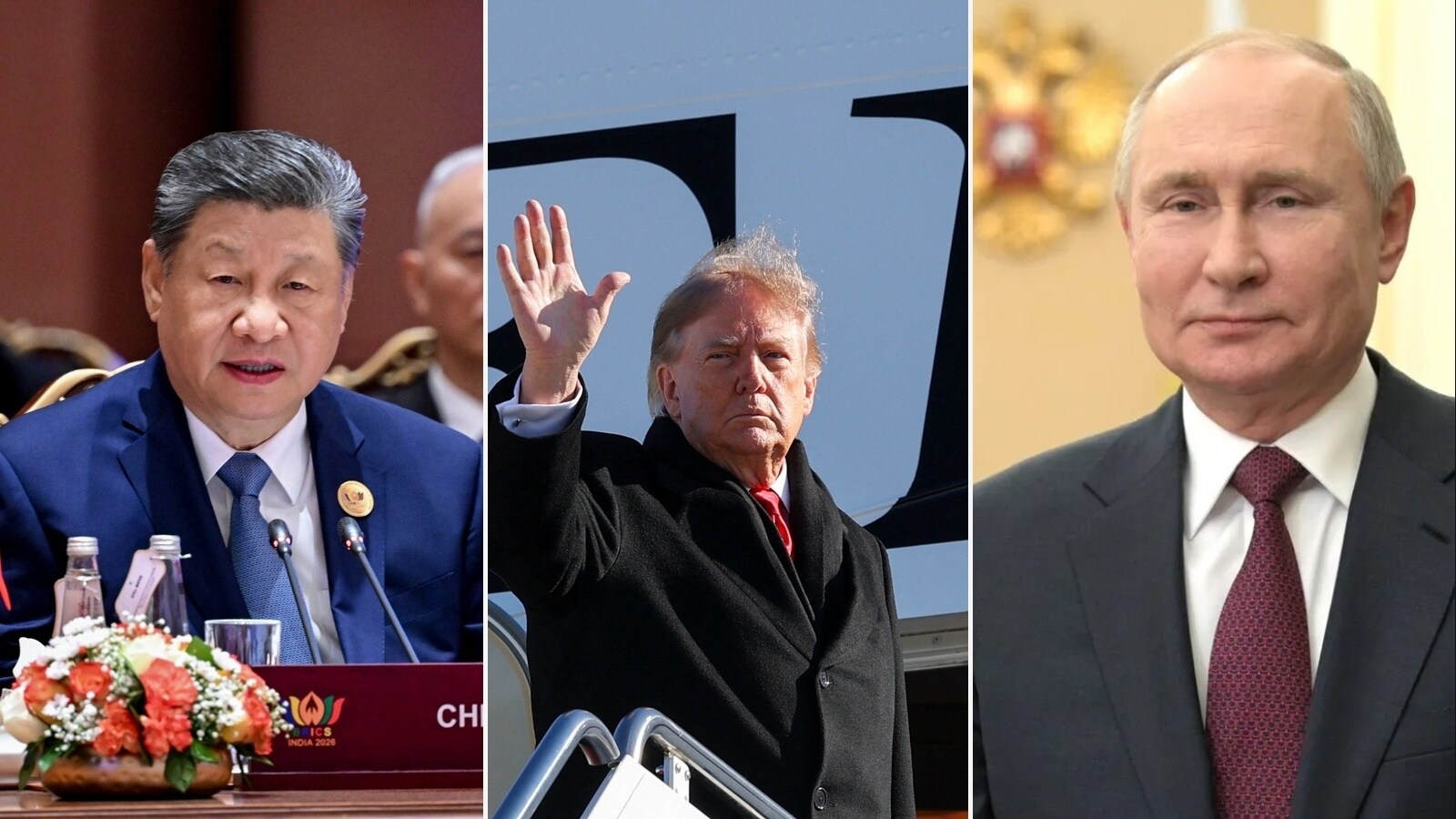
On November 19, world leaders President Trump, President Putin, and President Xi will gather in Shenzhen for a trilateral summit, aiming to address global peace and security issues. The key focus is on China's desire for recognition of its influence in Asia, while avoiding concessions on denuclearization. Russia and the US are expected to discuss their differing objectives regarding Ukraine, Iran, and the suppression of drone manufacturing material supplies to Kiev and Tehran.
During the summit, President Xi will seek assurances from both the US and Russia on Taiwan and China's role in the Indo-Pacific region. While the US seeks a resolution for the Ukraine conflict and alternative supply chains, Russia aims to redefine European security and reduce Chinese influence. Meanwhile, China aspires for recognition as the heir apparent on the global stage, a move that could negatively impact India, ASEAN countries, and Japan.
From an Indian perspective, a détente between Russia and the US could be advantageous; however, the recognition of the Chinese leader by the other two Presidents may escalate tensions along unresolved borders with China. China's growing influence in the Indian subcontinent, including Pakistan, Bangladesh, Maldives, Nepal, Sri Lanka, and Myanmar, has reduced these countries to tributary states due to Beijing's power and wealth.
The Shenzhen summit is expected to generate dramatic media coverage, but significant outcomes appear limited. It would not be in China's interest to ease pressures on Russia (in Ukraine) or the US (in Iran). The summit serves as a platform for projecting power domestically without making any substantial concessions, with each leader having distinct objectives.