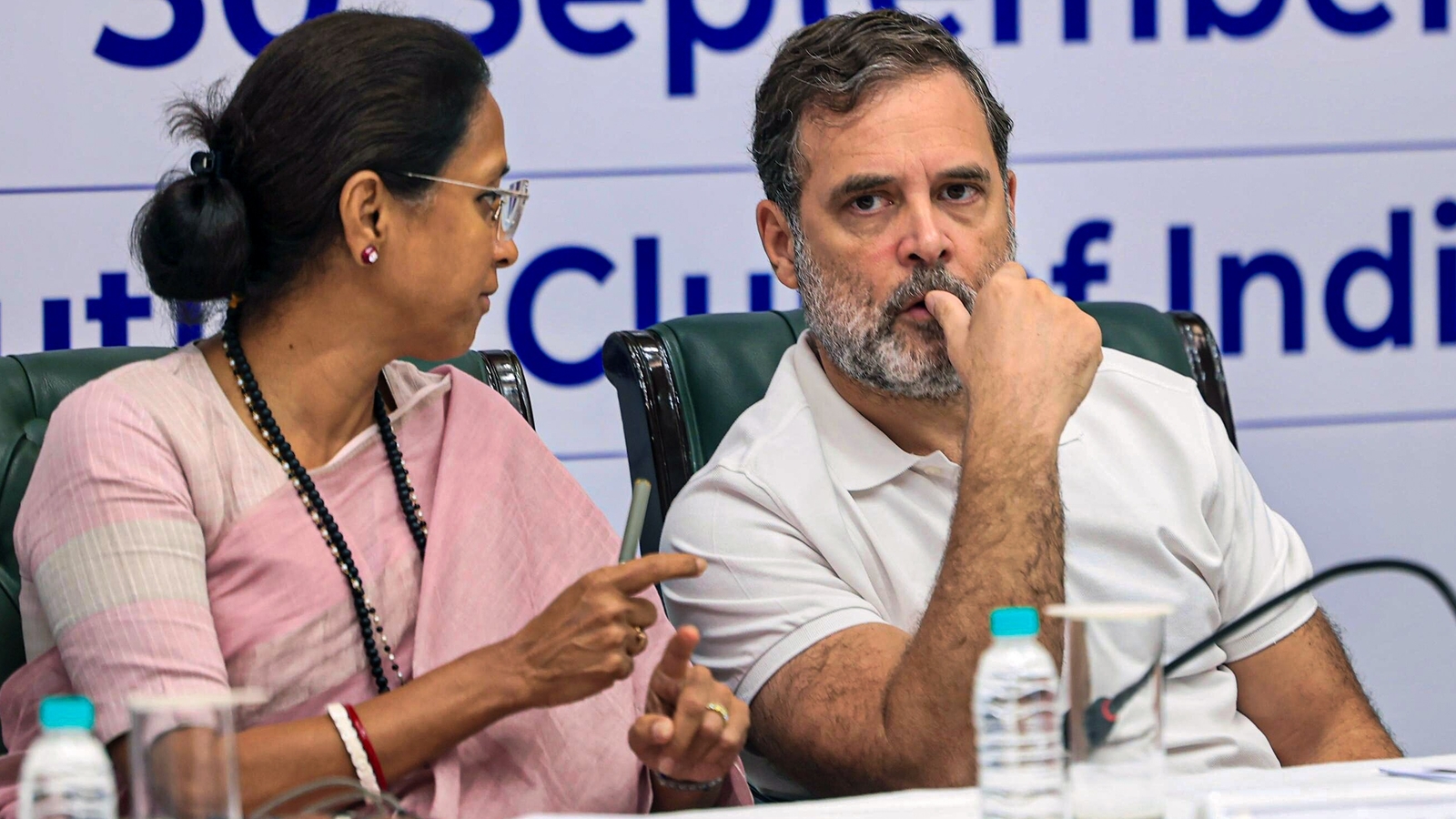
Congress MP Rahul Gandhi has stated that the positions of the partners within the INDIA bloc will remain unchanged, even if one of them supports the delimitation bill. This comment comes amidst speculation about the Nationalist Congress Party (NCP) potentially backing the government's delimitation bills, which are expected to be tabled in Parliament soon. During a media interaction, Gandhi was asked about reports suggesting that NCP might support delimitation and its potential impact on the INDIA bloc. He responded by saying, "In the INDIA bloc, their position is what it is, and it will not change if they support the bill."
Two bills – the Constitution (132nd Amendment) Bill and the Delimitation (Second) Bill – are set to be introduced in Parliament during a four-day special sitting starting Monday. These bills aim to increase the maximum strength of the Lok Sabha from 550 members to 850, with 815 coming from states and 35 from Union territories. Rahul Gandhi strongly objected to these proposals on Saturday, urging all parties to unite against it, stating that the number 850 represents "the murder of Indian democracy."
Gandhi also claimed that the bills would give Prime Minister Narendra Modi, Home Minister Amit Shah, and Gyanesh Kumar a "blank canvas" to redraw India's electoral map. Speculation regarding NCP backing delimitation has arisen due to indications from party insiders, suggesting that they might break ranks with the Congress to support the bill, in an attempt to prevent defections of their MPs. However, Supriya Sule, a leader within the NCP and Sharad Pawar's daughter, has cautioned that no decision will be made without reading the draft of the bill first.
Congress MP Rahul Gandhi has assured that none of the INDIA bloc partners' positions will change if they support the delimitation bill, amidst speculation about the Nationalist Congress Party (NCP) potentially backing the government's proposed bills. These bills aim to raise the maximum strength of the Lok Sabha from 550 members to 850, with 815 coming from states and 35 from Union territories. Rahul Gandhi has expressed strong opposition to these proposals, claiming they would give Prime Minister Narendra Modi, Home Minister Amit Shah, and Gyanesh Kumar a "blank canvas" to redraw India's electoral map.
Party insiders suggest that the NCP might break ranks with the Congress to support the bill in an effort to prevent defections of their MPs. However, Supriya Sule, a leader within the NCP and Sharad Pawar's daughter, has emphasized that no decision will be made without reading the draft of the bill first. The Constitution (132nd Amendment) Bill and the Delimitation (Second) Bill are set to be introduced in Parliament during a four-day special sitting starting Monday.
Congress MP Rahul Gandhi has called for unity among parties to oppose the delimitation bills, amidst speculation about the Nationalist Congress Party (NCP) potentially backing these proposed bills. These bills seek to raise the maximum strength of the Lok Sabha from 550 members to 850, with 815 coming from states and 35 from Union territories. Rahul Gandhi has expressed concerns that these bills would give Prime Minister Narendra Modi, Home Minister Amit Shah, and Gyanesh Kumar a "blank canvas" to redraw India's electoral map.
The Constitution (132nd Amendment) Bill and the Delimitation (Second) Bill are scheduled to be introduced in Parliament during a four-day special sitting starting Monday. While the NCP has not officially supported the delimitation bills yet, indications from party insiders have sparked speculation about potential support. Party leader Jitendra Awhad almost announced the final call on Friday evening – "Our party has decided to support the Delimitation Bill" – after meeting Sharad Pawar. However, Supriya Sule, a leader within the NCP and Sharad Pawar's daughter, has cautioned that no decision will be made without reading the draft of the bill first. Rahul Gandhi has urged all parties to join him in opposing these bills, stating that the number 850 represents "the murder of Indian democracy."