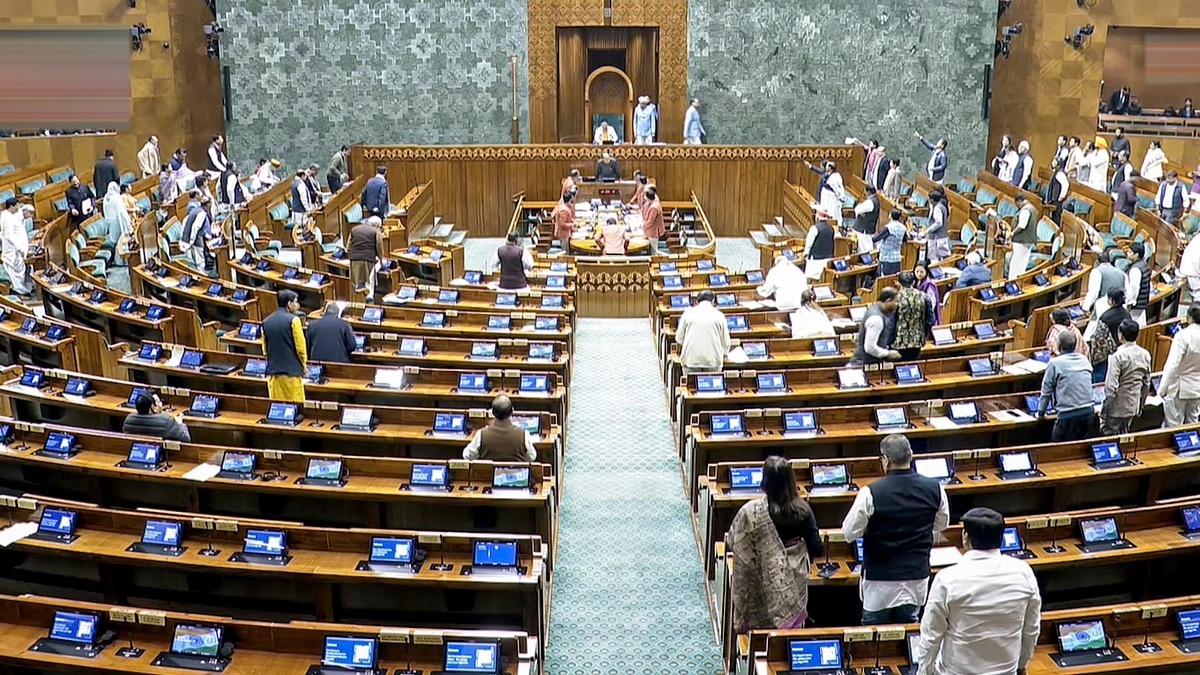
The Bharatiya Janata Party (BJP)-led government anticipates that over 370 Members of Parliament (MPs) from the ruling alliance and other parties will back the revised constitutional amendment on delimitation and women's reservation when it is presented in the Lok Sabha on Monday. With a total strength of 543 MPs, the amendment requires 360 votes to pass, leaving an 11-vote cushion according to government sources. The constitutional amendment process necessitates a majority of the House's members and at least two-thirds of those present and voting.
In response to Congress leader Rahul Gandhi's claims about the Chief Election Commissioner (CEC) being part of the proposed Delimitation Commission, government sources have rejected his assertions as blatant lies. The revised Bill appoints a serving or retired Supreme Court judge to head the commission, with the CEC eligible to take the second seat if he chooses. The third seat would ordinarily go to the State Election Commissioner concerned by virtue of office.
The Delimitation Commission will redraw Lok Sabha and Assembly constituencies in a process that could take up to two and a half years, according to government sources. They cited Articles 81 and 82 of the Constitution to argue that boundaries need to be periodically readjusted to account for population changes. The commission's decisions will have the force of law once published in the Gazette and subsequently tabled in the Lok Sabha and the concerned legislatures.
The proposed amendment aims to increase the number of Lok Sabha seats allotted to each state and Union territory by 50 percent, preserving their existing shares in the House, which are primarily based on the 1971 Census. The new seat allocations and boundaries would remain valid until 2051. Furthermore, the Rajya Sabha's strength and distribution of seats among states will not change, according to government sources.
The government has assured parties during recent discussions that seats would rise by 50 percent, with Home Minister Amit Shah offering to put the proportional increase in writing within an hour. The Centre has held extensive talks with the Congress and addressing concerns raised by the DMK and NCP (SP) through spelling out the increase in the revised Bill was helpful, sources added.
The amendment also includes provisions for increasing the number of seats reserved for Scheduled Castes and Scheduled Tribes by about 50 percent, with the final numbers determined using the latest Census figures. The one-third women's quota would be implemented after the first delimitation under the proposed amendment, with the commission identifying which seats to reserve for women, including within the SC and ST quotas.
The government expects the rollout of these changes to take place beyond the 2029 Lok Sabha elections. The Centre has assured parties that the increased representation will help address underrepresentation and ensure a more inclusive democracy in India.