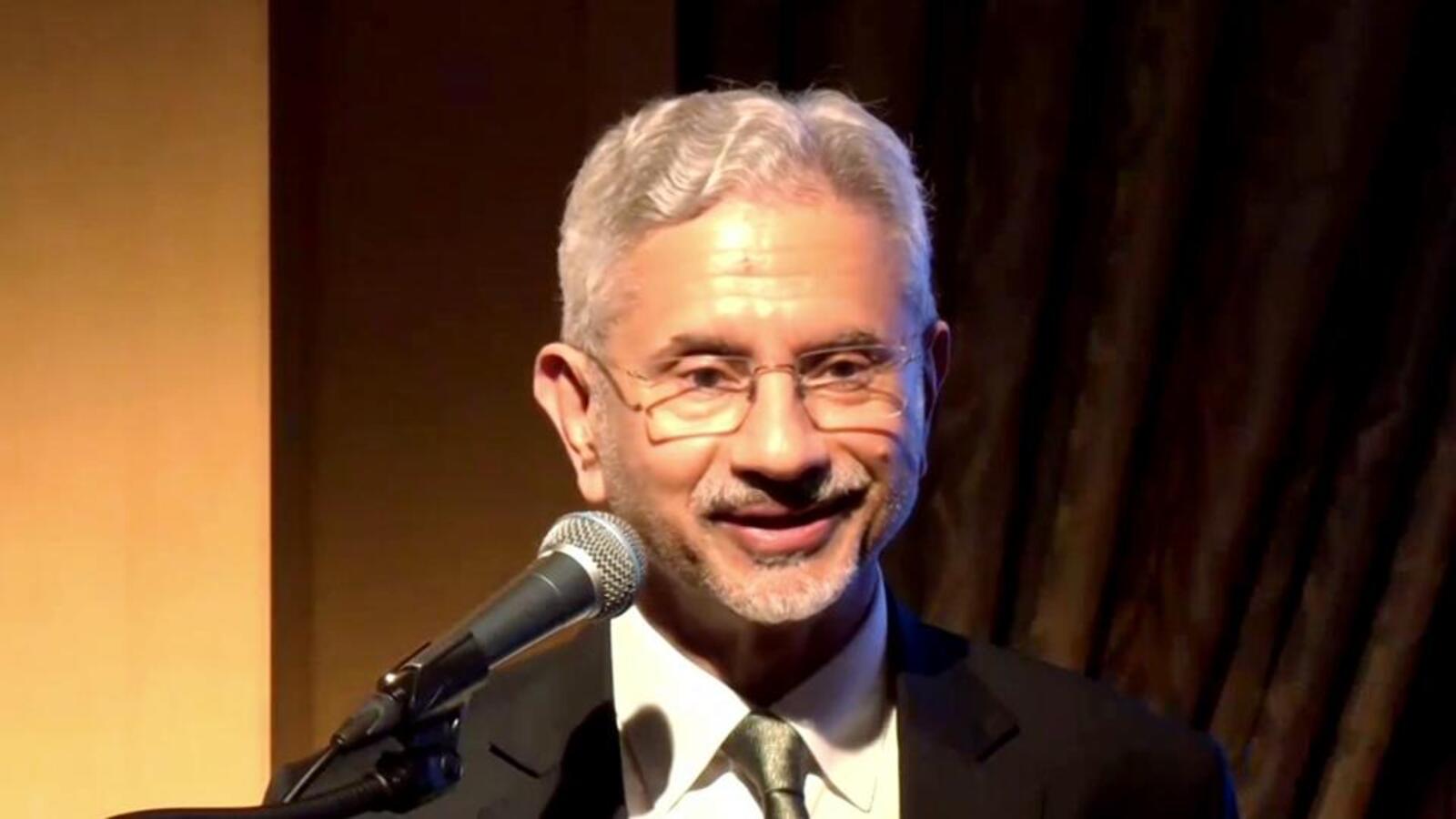
External Affairs Minister S. Jaishankar emphasized the significance of enhancing India-Japan ties as a means to stabilize and secure the Indo-Pacific region and serve as a crucial pillar in an increasingly multipolar Asia. The minister made these remarks during his address at the inaugural Raisina Tokyo event on Wednesday, where he was joined by Japan's Foreign Minister Toshimitsu Motegi.
In light of escalating conflicts, trade disruptions, and economic volatility, Jaishankar stated that most countries are de-risking and diversifying their alliances. Given this context, India and Japan, both members of key multilateral platforms such as the Quad, G4, and East Asia Summit, can expand their ties to not only stabilize the Indo-Pacific but also add an essential pillar to a multipolar Asia and world.
Jaishankar outlined five defining factors shaping the current global order, including the impact of the Covid pandemic, major conflicts, trade disruptions, economic volatility, and the weaponization of various aspects of global economic activity by relevant players. In such uncertain times, trusted partnerships like India-Japan are seen as solutions for nations and enterprises that value reliable partners and shorter supply chains.
The Indo-Pacific region presents a unique challenge due to these five factors being strongly imprinted on its landscape. As two leading nations of the region committed to maintaining a free and open Indo-Pacific, India and Japan must secure their national interests while encouraging freedom of choice and promoting growth and stability by helping partners build strength and deepen reliable and trusted cooperation.
Japan and India perceive each other as complementary partners, with potential new momentum in bilateral cooperation coming from factors such as the larger strategic context and political leadership on both sides. Jaishankar outlined six issues Japan should consider when engaging India, including recent transformations in India's business environment and growth in infrastructure such as highways, ports, airports, rail, and power.
Improved infrastructure positions India as a platform for manufacturing for global markets and offshore production, taking advantage of its large domestic market. Soft infrastructure and human resource development have also seen improvements, with notable results in sectors like digitalization, space, drones, health, and defense. Jaishankar proposed that the India-Japan agenda should focus on future collaborations in advanced manufacturing, semiconductors, critical minerals, ICT, clean energy, and pharmaceuticals, with policies and frameworks enabling closer security and defense cooperation. Stronger people-to-people linkages and societal activities should support these issues.