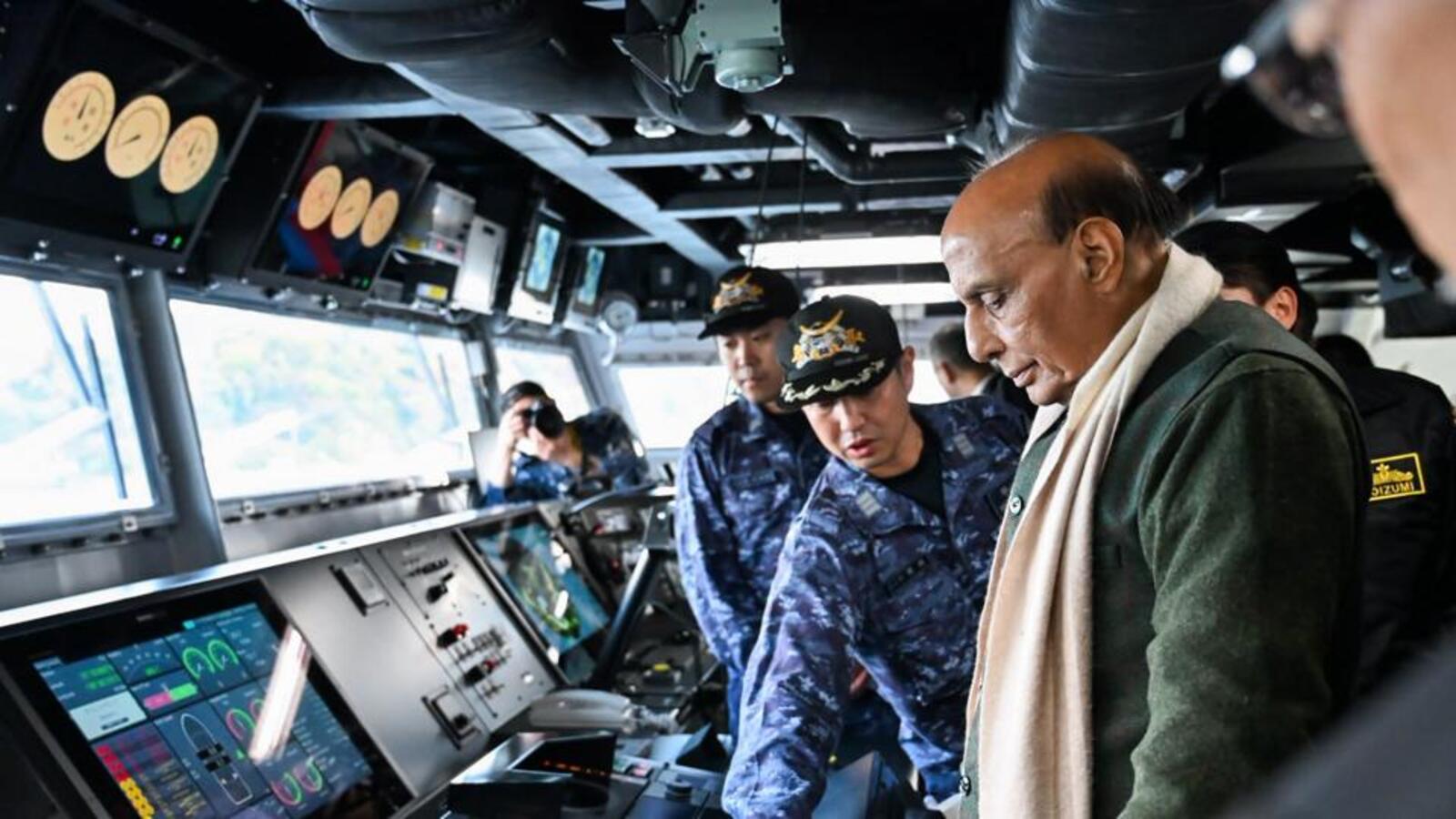
Defense Minister Rajnath Singh emphasized the importance of India's growing maritime collaboration with Japan in promoting security and stability within the Indo-Pacific region. During his visit to the Japan Maritime Self-Defense Force base in Yokosuka, Singh inspected a Mogami-class multi-mission frigate alongside his Japanese counterpart Shinjiro Koizumi. The two leaders highlighted the significance of joint maritime exercises in deepening understanding and advancing defense cooperation between India and Japan. On Thursday, Singh and External Affairs Minister S Jaishankar will participate in the India-Japan 2+2 dialogue with their Japanese counterparts in Tokyo to strengthen bilateral ties. The conversation is expected to focus on security concerns in the Indo-Pacific region, including China's assertive moves to exert influence and challenge the established international order. In addition, India has reiterated its commitment to a free, open, and inclusive Indo-Pacific, emphasizing respect for the sovereignty and territorial integrity of all nations.
In Tokyo, Singh also addressed members of the Indian diaspora, discussing India's economic growth and emergence as one of the world's fastest-growing major economies, with a growth rate of around 7.8%. Moreover, he highlighted India's efforts to strengthen its global standing in the defense sector, moving beyond self-reliance. The dialogue between India and Japan follows their unveiling of measures to expand cooperation in various sectors such as defense, energy security, rare earths, and artificial intelligence during the 16th India-Japan Summit held five months ago.
Defense Minister Rajnath Singh recently visited the Japan Maritime Self-Defense Force base in Yokosuka, marking a significant step forward in India's growing maritime cooperation with Japan. During his visit, Singh inspected the Mogami-class multi-mission frigate JS Natori alongside his Japanese counterpart Shinjiro Koizumi. The two leaders emphasized the importance of joint maritime exercises in deepening understanding and advancing defense cooperation between India and Japan.
Singh's visit to Japan coincides with preparations for the fourth edition of the India-Japan 2+2 dialogue, scheduled to take place on Thursday in Tokyo. The meeting aims to strengthen bilateral ties and address security concerns in the Indo-Pacific region, including China's assertive moves to exert influence and challenge the established international order.
India has consistently advocated for a free, open, and inclusive Indo-Pacific, emphasizing respect for the sovereignty and territorial integrity of all nations. During his visit, Singh also addressed members of the Indian diaspora in Tokyo, discussing India's economic growth and emergence as one of the world's fastest-growing major economies, with a growth rate of around 7.8%. He further highlighted India's efforts to strengthen its global standing in the defense sector, moving beyond self-reliance.
Defense Minister Rajnath Singh recently visited the Japan Maritime Self-Defense Force base in Yokosuka, marking a significant step forward in India's growing maritime cooperation with Japan. During his visit, Singh inspected the Mogami-class multi-mission frigate JS Natori alongside his Japanese counterpart Shinjiro Koizumi. The two leaders emphasized the importance of joint maritime exercises in deepening understanding and advancing defense cooperation between India and Japan.
Singh's visit to Japan also provided an opportunity for him to address members of the Indian diaspora, discussing India's economic growth and emergence as one of the world's fastest-growing major economies, with a growth rate of around 7.8%. Singh highlighted India's efforts to strengthen its global standing in the defense sector, moving beyond self-reliance.
The visit also coincides with preparations for the fourth edition of the India-Japan 2+2 dialogue, scheduled to take place on Thursday in Tokyo. The meeting aims to strengthen bilateral ties and address security concerns in the Indo-Pacific region, including China's assertive moves to exert influence and challenge the established international order.