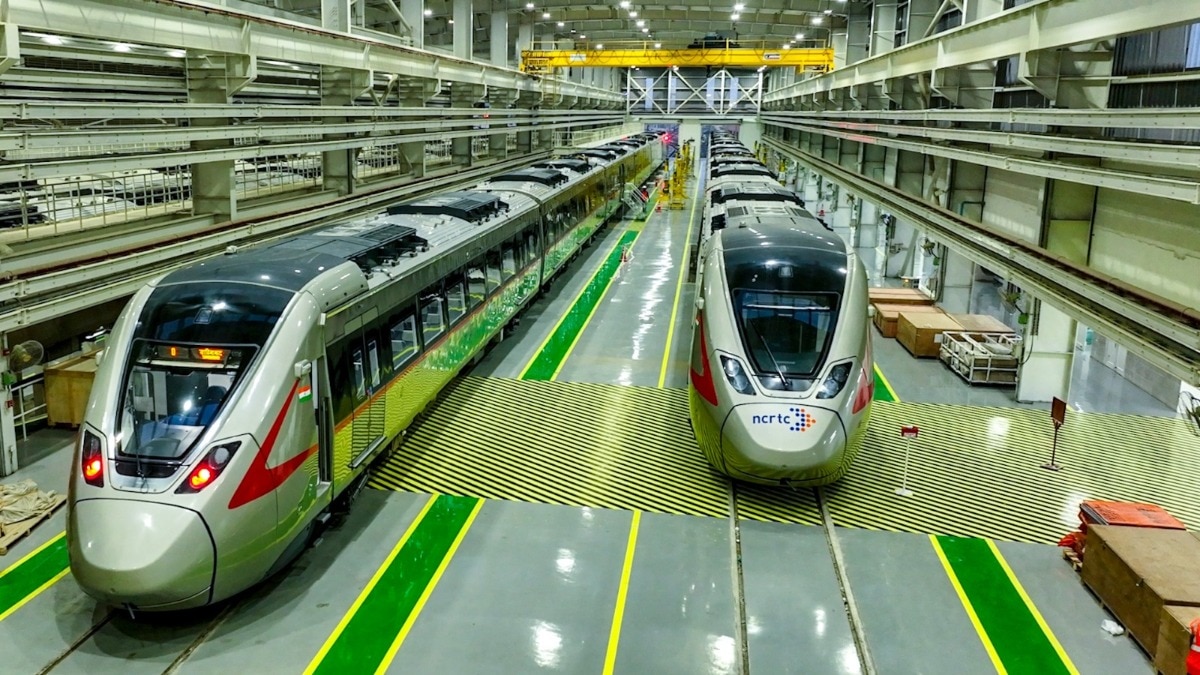
For decades, commuting between Meerut and Delhi presented a daily challenge, with lengthy journeys and unpredictable traffic deterring many from pursuing jobs, education, or business opportunities in the bustling metropolis. This scenario is rapidly changing, thanks to the introduction of Rapid Rail and Metro services, which are gradually shortening the distance between Meerut and Delhi's economic opportunities within the National Capital Region (NCR).
Meerut, once a city primarily frequented by residents seeking work or education elsewhere, is increasingly becoming a destination in its own right. This transformation can be seen in homes, markets, educational institutions, and property offices across the city. Students are finding it easier to commute to colleges in neighboring cities without the need for rental accommodation, traders are benefiting from increased customer accessibility, professionals are considering Meerut as a residential base while working elsewhere, and property investors are showing interest in areas around transport corridors.
The impact of improved connectivity goes beyond travel convenience, allowing families to make different choices about education, accommodation, and daily life. For instance, Vikas Gupta, a resident of Meerut, now has the advantage of sending his daughters to college in Muradnagar without them having to live away from home. The Rapid Rail service has made it possible for traders from Delhi, Ghaziabad, and Sahibabad to make same-day business trips to Meerut, expanding the city's commercial reach beyond its immediate neighborhood.
The improved transport links are also benefiting established businesses in sectors like sports goods, jewellery, pharmaceuticals, scissors manufacturing, and traditional brass-band instruments. The jewellery trade has seen a significant boost, with traders finding it easier to access Meerut's bullion and jewelry market. Local customers from distant areas are also finding it more convenient to visit the market, contributing to an approximate 30% increase in business.
The benefits of better connectivity extend to Meerut's micro, small, and medium enterprises (MSMEs), employing around 5.5 lakh people according to District Magistrate Singh. The city's traditional industries could potentially attract new customers and markets, while improved transport could make it easier for workers to reach industrial areas.
Perhaps the most tangible evidence of the impact of better connectivity can be seen in Meerut's property market. Areas around Rapid Rail and Metro stations, such as Shatabdi Nagar, Partapur, Mohiuddinpur, and parts of Delhi Road, are attracting growing interest from investors and homebuyers. As a city becomes easier to navigate, it opens up new possibilities for growth and development, transforming the lives of its residents and businesses alike.