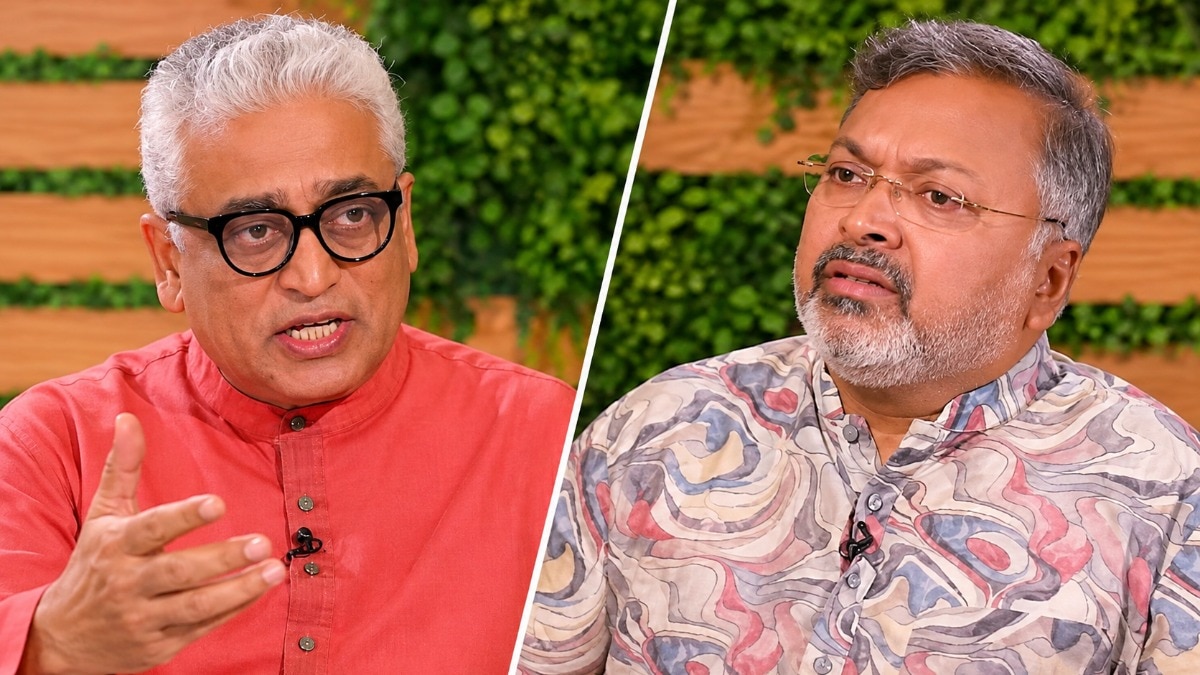
Mythologist and author Devdutt Pattanaik has sparked a heated debate regarding the role of women in Hindu society after suggesting that the worship of goddesses does not necessarily equate to the worship of women in India. In an interview with Rajdeep Sardesai, Pattanaik questioned the common belief that Hinduism accorded women a prominent position due to its pantheon of female deities. On Saturday, he argued that contemporary Hindu religious imagery increasingly sidelines female deities and that many gods are depicted without their consorts, such as Sita in Ram temples or Radha with Krishna. Critics have pointed out India's extensive traditions of goddess worship, including prominent Shakti shrines and temples where female deities are the presiding gods. The debate has raised questions about whether the representation of goddesses alongside male deities can be separated from women's position in religious and social life.
On March 12th, during an interview with Rajdeep Sardesai, Devdutt Pattanaik questioned the notion that Hinduism accorded women a prominent position due to its pantheon of female deities. He pointed out the growing absence of female deities from popular representations of Hindu gods and argued that contemporary Hindu religious imagery increasingly sidelines female deities. Pattanaik cited examples such as the building of Ram temples without Sita, and the worship of Krishna without Radha in temples dedicated to him in Pandharpur, Udupi, and Tirupati. He also argued that in many temples, goddesses are not always represented alongside their male counterparts, with Shiva shown without Shakti, Durga without her family, and Krishna more frequently depicted with Arjun than Radha.
Critics have pointed out India's extensive traditions of goddess worship, including prominent Shakti shrines and temples where female deities are the presiding gods. They argue that Pattanaik's assertion that women are not worshipped in India overlooks the country's continuing traditions of goddess worship. The debate has raised questions about whether the representation of goddesses alongside male deities can be separated from the broader question of women's position in religious and social life, with some arguing that the absence of a female consort cannot establish that goddess worship has diminished or that women are not worshipped.
Savitri Mumukshu, an entrepreneur and independent history researcher, has accused Pattanaik of contradicting his earlier remarks to provoke controversy and seek attention. However, Pattanaik's assertion that women are not worshipped in India has faced criticism from those who argue that it overlooks the country's extensive and continuing traditions of goddess worship. Critics have pointed to the prominence of Durga, Kali, Lakshmi, and Saraswati in household worship, festivals, and religious practices across regions. They argue that the absence of a female consort, particularly in representations of male deities, cannot by itself establish that goddess worship has diminished or that women are not worshipped.