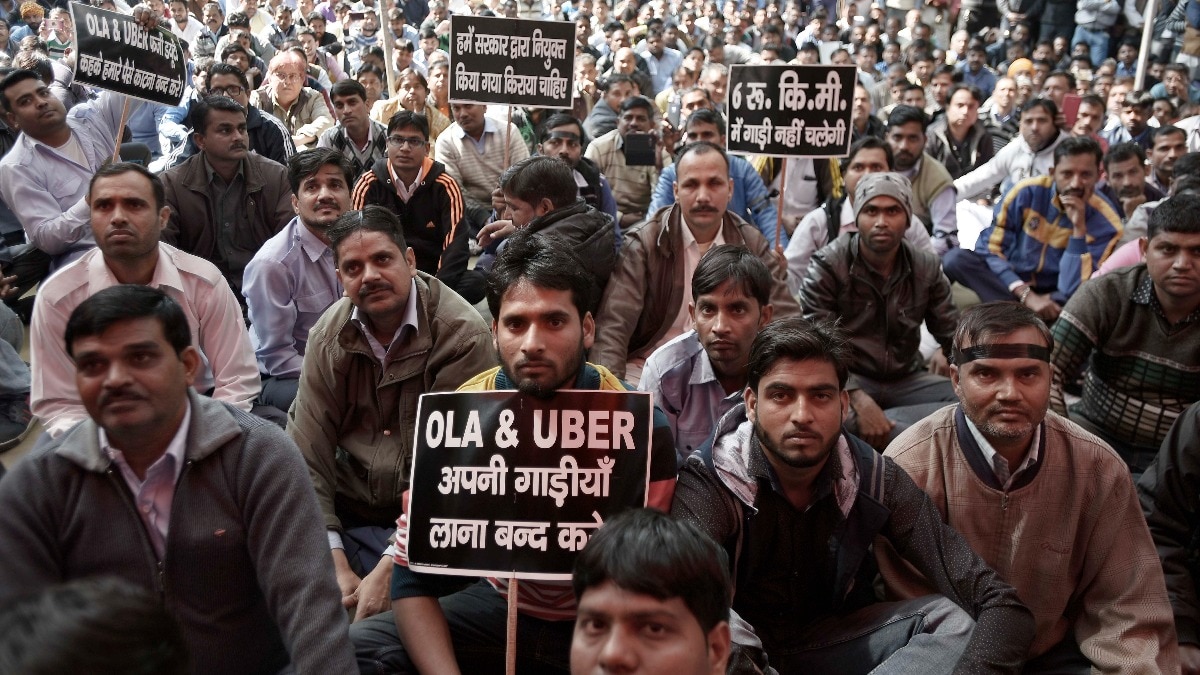
Transport unions associated with the Bharatiya Mazdoor Sangh (BMS) staged a protest in Delhi's Ramlila Maidan on Thursday, causing a surge in cab fares across the Delhi-National Capital Region (NCR). The strike was centered on demands for a revision of auto and taxi fares, a ban on private bike-taxi services, and the withdrawal of certain fitness-related requirements for auto-rickshaws. Drivers also raised concerns about their livelihoods, working conditions, and safety. One driver questioned why the government could ban TikTok but not Ola, Uber, and Rapido, arguing that a homegrown alternative, Bharat Taxi, had failed to gain traction. The strike significantly impacted commuters' pockets, with fares on Ola and Rapido surging by at least 30% during non-peak hours for both auto-rickshaw and cab rides.
During peak office hours, a ride that generally costs around Rs 300 on platforms like Ola and Rapido showed fares of over Rs 400 at 9 am, crossing Rs 500 by 10 am. A South Delhi-based homemaker reported a roughly 3-km auto ride to Cambridge School from Hemkunt Colony was showing Rs 90-92 on Uber, compared with the usual Rs 75–80. The hourly rental fare for a cab also climbed significantly, reaching Rs 406. Some drivers refused to honor app-displayed fares and demanded higher amounts, causing harassment for commuters.
For drivers, the problem seemingly goes beyond fares fluctuating during peak hours. Anupam Kumar, a cab driver who operates on both Ola and Rapido, said the payment structure on ride-hailing platforms makes longer journeys increasingly unviable. The amount paid per kilometer keeps declining as the distance increases, making it difficult for drivers to earn a living from long trips while maintaining the same fuel cost. This problem is common across several cab-hailing applications, according to Kumar.
The protest has also had implications beyond the national capital. Union members in places like Ambala and Chandigarh, as well as parts of Haryana outside Gurugram, have been particularly strict about the strike. Drivers found using cab-hailing applications to ferry passengers allegedly have their phones seized, making it difficult for drivers to continue accepting app-based bookings in some areas beyond NCR. Safety concerns are also a major issue for drivers.