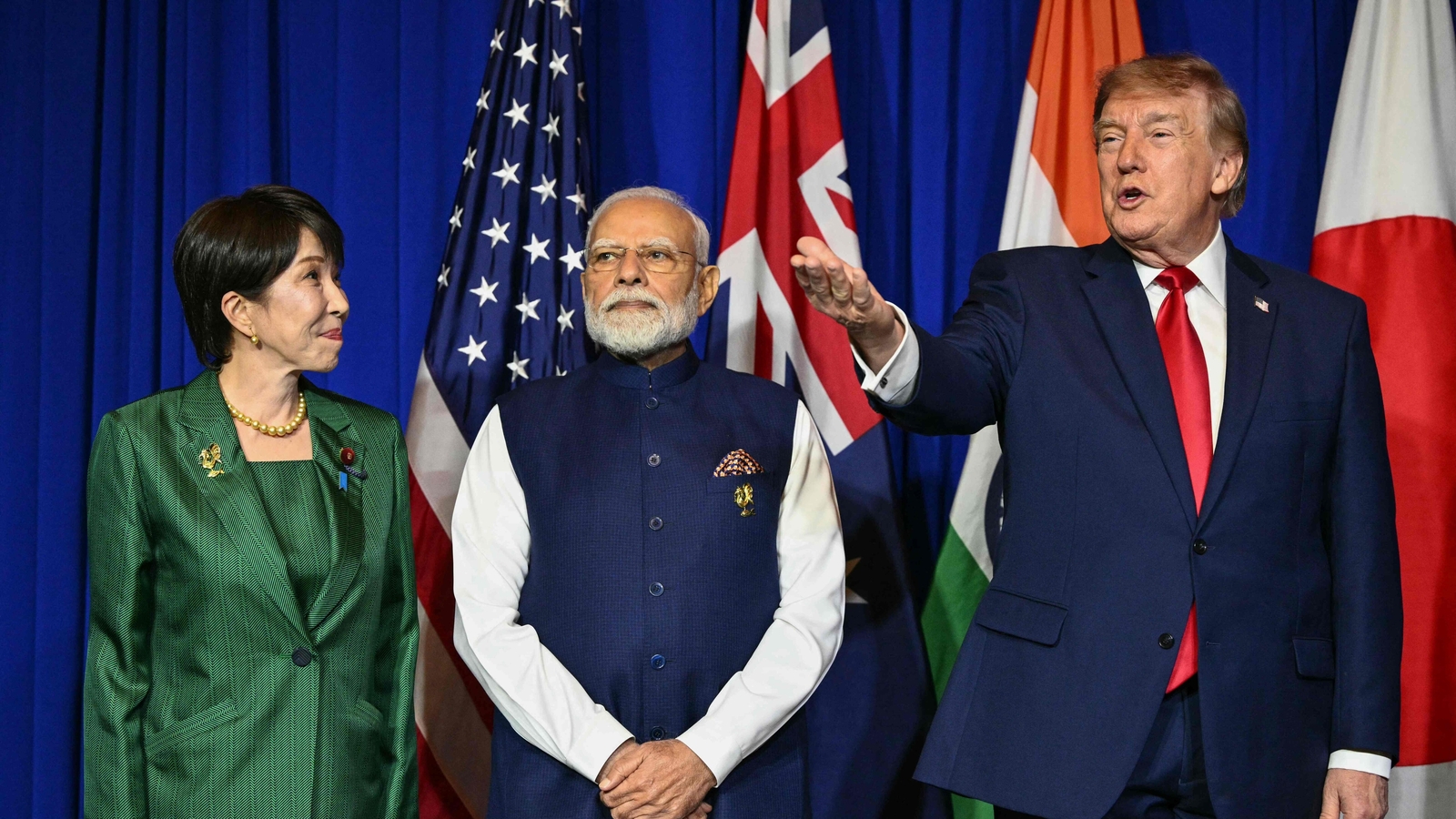
In a significant diplomatic gathering, Prime Minister Narendra Modi of India, along with his Australian and Japanese counterparts, and US President Donald Trump, convened on the sidelines of the Quad Summit in Manila, Philippines. The leaders shared a joint statement that condemned economic coercion and unilateral actions that disrupt regional peace.
The Quad Summit, an alliance between India, Australia, Japan, and the US, was held on Tuesday. During the summit, the leaders expressed their concerns over regional stability and discussed strategies to counteract any threats to it.
Meanwhile, India and ASEAN agreed to strengthen cooperation in disaster management. This collaboration will focus on improving early warning systems, sharing satellite and meteorological data, conducting joint preparedness exercises, and providing rapid humanitarian assistance.
In addition to the Quad Summit, Prime Minister Modi attended the 23rd ASEAN-India Summit and the 21st East Asia Summit. A meeting of the Quad leaders is also planned on the sidelines of these ASEAN meetings. The Quad meeting is scheduled just before a trilateral meeting between Chinese President Xi Jinping, Russian President Vladimir Putin, and Trump in Shenzhen, China, during the Asia-Pacific Economic Cooperation (APEC) leaders' meeting.
The ASEAN Summit, established in 1967, is one of the most influential regional groupings, consisting of Brunei, Cambodia, Indonesia, Laos, Malaysia, Myanmar, the Philippines, Singapore, Thailand, Timor-Leste, and Vietnam. India, along with countries such as the US, China, Japan, and Australia, serves as a dialogue partner of this grouping.
India views its strategic ties with ASEAN members as crucial for building resilience against rapid geopolitical changes and promoting peace and stability in Asia. The year 2026 has been designated as the India-ASEAN Year of Maritime Cooperation, with maritime cooperation remaining a key area of focus.
Trump described his visit to the Philippines as a "big trip" and hinted at a possible meeting with North Korean leader Kim Jong Un in China before leaving for Manila. The East Asia Summit, led by ASEAN, will also take place during these meetings, serving as a platform for setting regional norms and discussing global security issues.
During his visit to the Philippines, Indian Prime Minister Narendra Modi visited the Khalsa Diwan Gurudwara in Manila on Tuesday. The Gurudwara, established in 1901 and formally organized in 1903, is recognized as the oldest Sikh place of worship in the Philippines.
Modi laid the foundation stone for its redevelopment during his visit to the Khalsa Diwan Gurudwara. The move is intended to strengthen cultural ties between India and the Philippines and further boost the friendship between the two nations.
The Prime Minister's visit comes at a crucial time as he attends the 23rd ASEAN-India Summit and the 21st East Asia Summit, as well as a meeting of Quad leaders in Manila. These summits provide an opportunity for India to deepen its engagement with various regional partners and discuss shared concerns.
China has confirmed that President Xi Jinping will hold a trilateral meeting with his US and Russian counterparts, Donald Trump and Vladimir Putin, in Shenzhen this week. The three leaders are expected to discuss "world peace" and strategic stability during their meeting.
The trilateral summit is scheduled for Thursday on the sidelines of the Asia-Pacific Economic Cooperation (APEC) leaders' summit in southern China. This will be the first such meeting between the three world powers, and it is expected to have groundbreaking significance.
The meeting comes amidst geopolitical tensions in the region, with the Quad Summit taking place in Manila, Philippines, on the same week. The Quad alliance, comprising India, Australia, Japan, and the US, is aimed at promoting regional stability and countering any threats to it.
The trilateral meeting between China, the US, and Russia will serve as an important forum for discussing global security issues and other matters of shared concern. It remains to be seen how this meeting will impact the broader strategic landscape in East Asia.