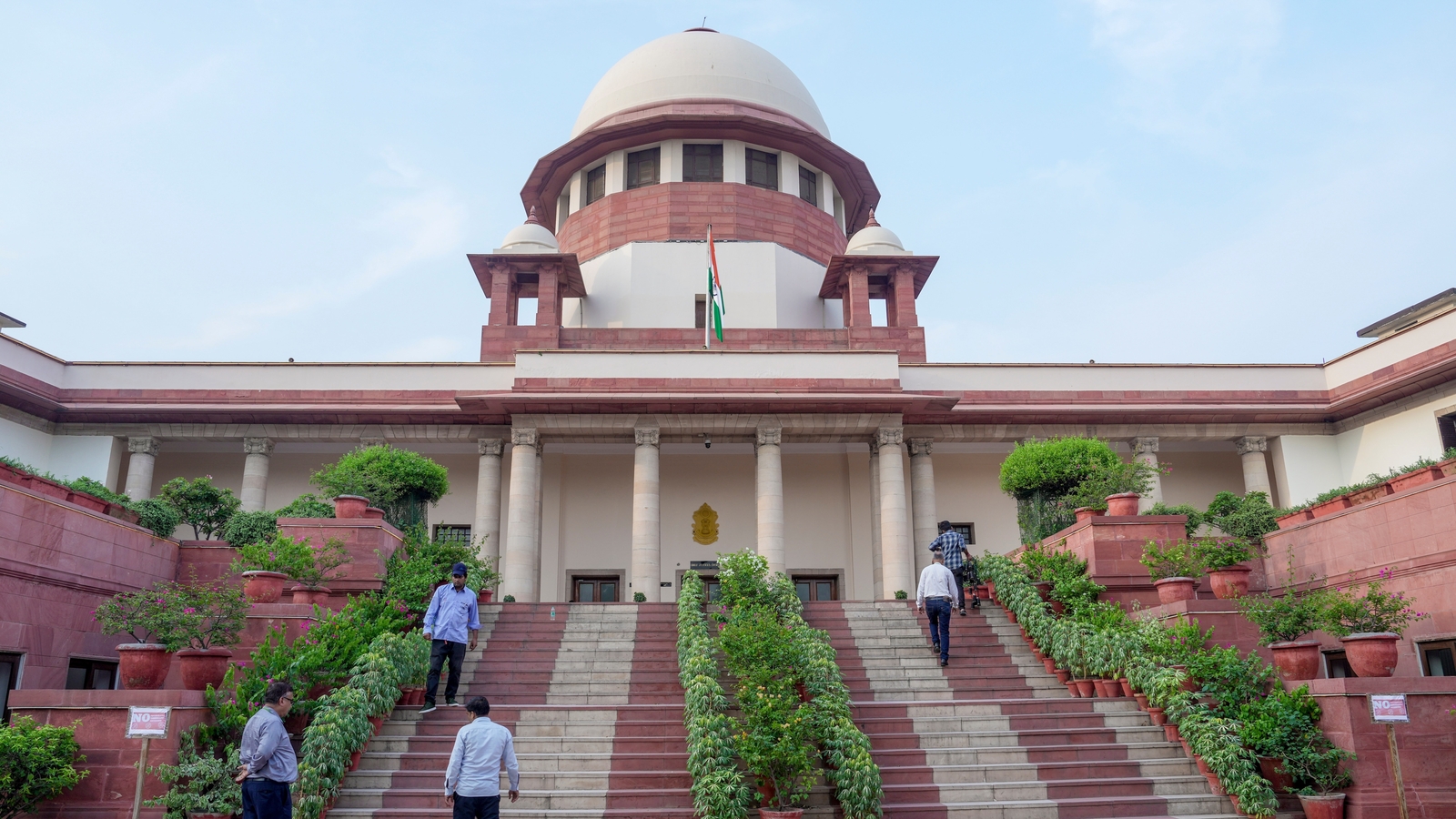
In a groundbreaking decision on November 26, the Supreme Court ruled that victims of crimes or their legal representatives must be given an opportunity to express their views before the state decides whether to grant early release to a convict. The ruling emphasizes that a victim's role in the criminal justice system does not end with the conclusion of the trial and sentencing.
In a case challenging the Bihar government's decision to prematurely release former MP Anand Mohan, the court held that such an opportunity should be read into applicable prison rules for grave offenses where victims or their families can reasonably be traced and approached. The court clarified that this participation would not give victims veto power over the state's decision, but it would ensure a more comprehensive review of remission cases.
The implications of this ruling are particularly significant in light of the Bilkis Bano rape case, where two of the 11 convicts had their life sentences suspended by the Supreme Court on October 28. Bano, who survived gang rape during the 2002 Gujarat riots and lost seven family members, including her three-year-old daughter, expressed disappointment that she was not informed about the proceedings or given a chance to be heard.
The judgment in the Anand Mohan case addresses the state's executive power to grant remission and early release under applicable prison rules. The suspension of sentence for two convicts in the Bilkis Bano case involves the exercise of the Supreme Court's judicial power, which is legally distinct from this ruling. However, the reasoning adopted by the bench provides an important basis for examining the larger question of victim participation in proceedings that could result in a convict's early release before the full term of the sentence has been served.
The court noted that neither Section 432 of the Code of Criminal Procedure nor its corresponding provision, Section 473 of the Bharatiya Nagarik Suraksha Sanhita (BNSS), expressly provides for notifying or hearing the victim before a remission decision is taken. Yet, it questioned whether remission could continue to be treated as a matter exclusively between the state and the convict when criminal procedure had increasingly recognized victims as important participants in other stages of the justice system, including appellate and bail proceedings.
The court further pointed out that the decision to grant early release to a convict could have a direct impact on the victim and their family, particularly in serious offenses whose consequences continue long after the trial. The victim could possess relevant information or have legitimate concerns relating to the continuing impact of the offense, the convict's conduct, subsequent developments affecting the victim's safety, and the possibility of intimidation, harassment, or renewed vulnerability following the convict's release.
Therefore, the court held that an identifiable and traceable victim or their recognized legal representative must be afforded a reasonable opportunity to submit a representation before the competent authority decides a remission plea. Such a representation must be considered along with other relevant material without taking away the state's independent responsibility to decide the matter.