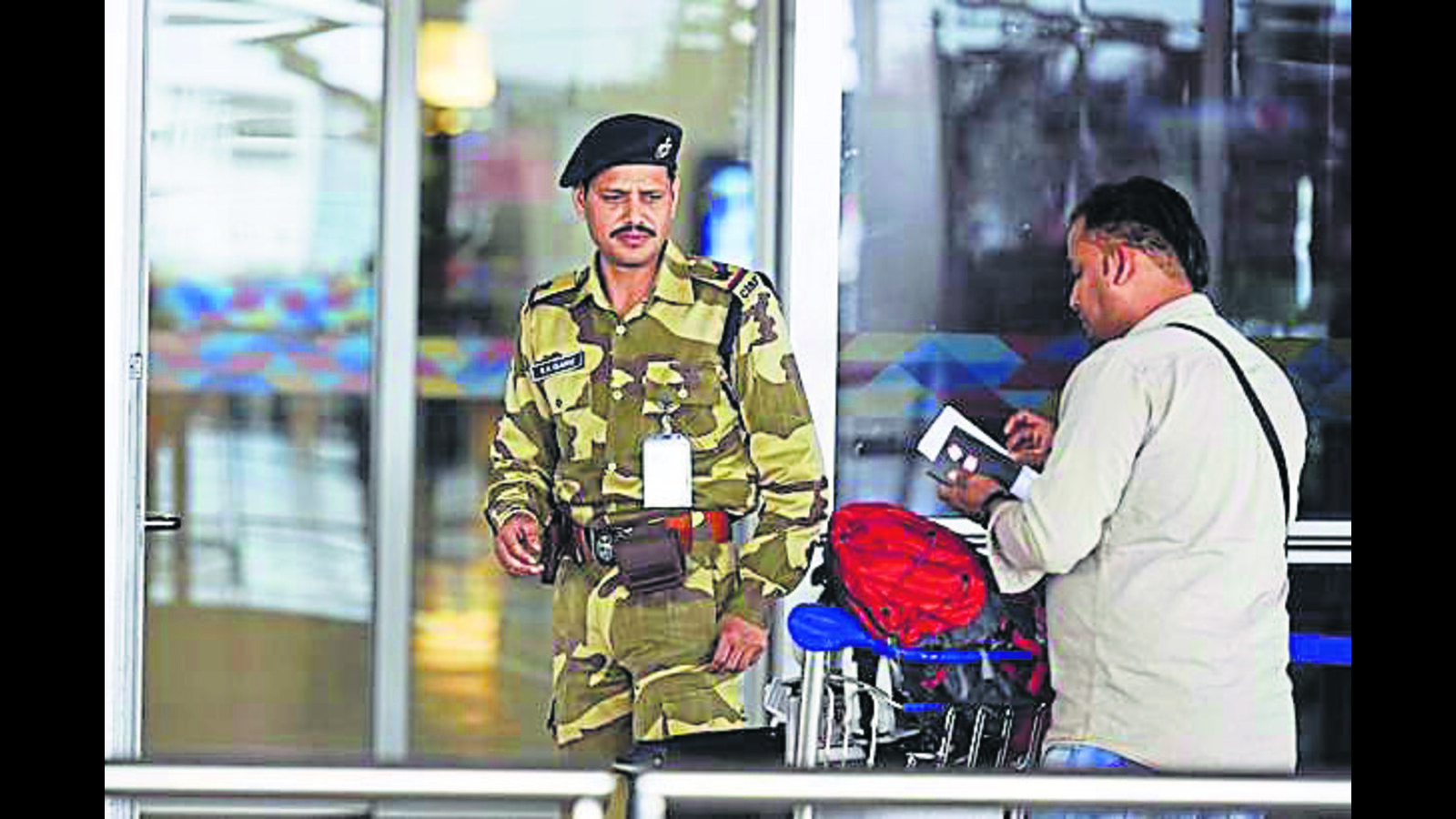
The Bureau of Civil Aviation Security (BCAS) has issued new norms for airport security, which will result in a decrease in the number of Central Industrial Security Force (CISF) personnel at airports across the country. This change is due to the increased deployment of private security staff in functions that do not require armed guards. The Ministry of Civil Aviation (MoCA) has approved this plan, which was developed after extensive surveys involving various stakeholders over a period of one year.
Under the new norms, CISF will continue to be responsible for critical security locations, including armed protection, perimeter security, mobile patrolling, surveillance and intelligence, quick response teams, and other sensitive installations. The plan aims to control security expenditure and avoid an increase in Passenger Service Fee (PSF), ensuring that additional security costs are not passed on to passengers during a time of reduced demand and high airfares.
The norms prescribe manpower requirements for various security functions, such as guarding terminal buildings, access control at departure and arrival gates, passenger screening, and frisking. The order also specifies staffing requirements for DigiYatra lanes and covers cargo access control. Airports have been divided into three categories based on passenger traffic and flight operations.
All airports and BCAS regional teams will conduct airport-specific manpower surveys to determine the total security staff requirements by the end of this month. The extent of any reduction in deployment requirements will become clearer once these surveys are completed. The final numbers will be sent to MoCA for review and MHA for final approval.
Concerns regarding the training, accountability, and preparedness of private security personnel at airports have been addressed, as they will work under the supervision of the CISF's Chief Airport Security Officer (CASO) and will be trained and managed by the CISF in all aspects. This exercise has been conducted in consultation with all stakeholders.