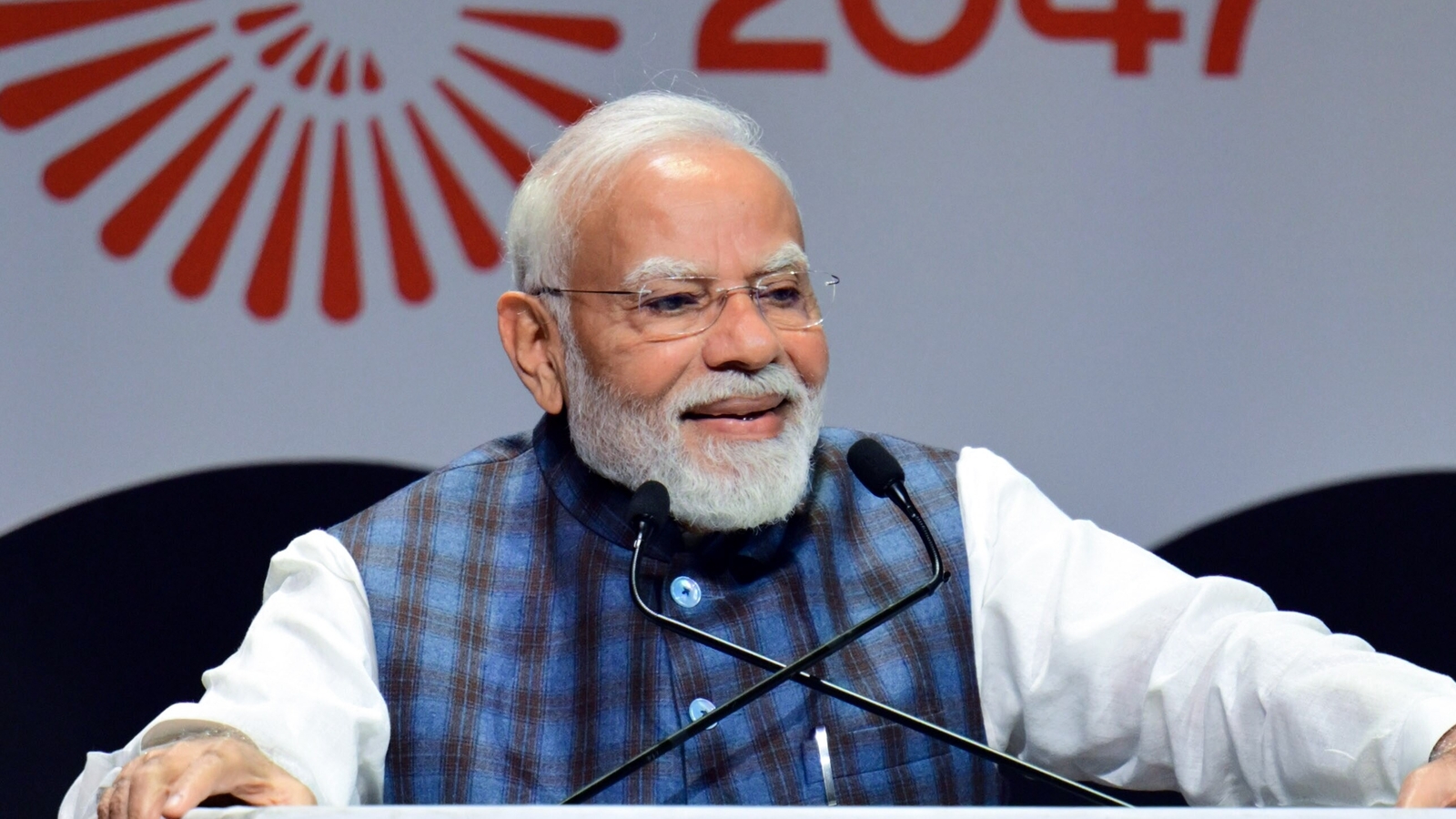
At the Federation of Indian Chambers of Commerce and Industry (FICCI) centenary convention, Prime Minister Narendra Modi lauded the government's reduced corporate tax rate and the elimination of income tax on earnings up to ₹12 lakh. However, he questioned industry leaders about their response to these tax cuts, asking if they had increased salaries or hired more employees. The prime minister emphasized that the income tax relief had significantly boosted people's purchasing power and urged businesses to acknowledge the government's efforts. Modi also encouraged Indian industries to expand their global ambitions, reduce dependence on imports, and strengthen domestic manufacturing across sectors. He called for long-term investment decisions to prioritize India's national interests, with a focus on increasing value addition in domestic products.
In his address, Modi highlighted changes to income tax return filing and refund procedures, claiming that the government had simplified the system to prevent unnecessary delays. Beyond taxation, he urged Indian businesses to look beyond the domestic market, deepen domestic manufacturing, and increase value addition. Modi emphasized that India's economic growth, with merchandise exports of nearly USD 50 billion in October, demonstrated the country's potential for international competitiveness. He pointed to the World Bank report that claimed over 500 million Indians had moved out of poverty over the past 12-13 years and reported that global institutions have revised their growth projections for India upwards, with the economy expected to grow at around 7%. Modi concluded by stating that a "Developed India" is not just a slogan but a commitment.
In his address at the Federation of Indian Chambers of Commerce and Industry (FICCI) centenary convention, Prime Minister Narendra Modi highlighted changes to income tax return filing and refund procedures, claiming that the government had simplified the system to prevent unnecessary delays. Beyond taxation, he encouraged Indian businesses to look beyond the domestic market, deepen domestic manufacturing, and increase value addition. He emphasized that India's economic growth, with merchandise exports of nearly USD 50 billion in October, demonstrated the country's potential for international competitiveness.
Modi also called on Indian industries to reduce their dependence on imports and strengthen domestic manufacturing across sectors where they already had the resources and potential to produce goods for both domestic and international markets. He cited pharmaceuticals as an example of a sector where India could increase its capabilities in ingredients, as well as finished medicines. Modi urged companies to identify imported products that could be manufactured domestically and invest in the technology required to produce them.
Prime Minister Narendra Modi, speaking at the Federation of Indian Chambers of Commerce and Industry (FICCI) centenary convention, praised the government's income tax relief to the corporate sector but also questioned if industries had increased salaries or hired more employees in response. The prime minister highlighted that the government had reduced the basic corporate tax rate from 30% to 22%, with no income tax on earnings up to ₹12 lakh. He urged India Inc to ensure that the benefits of tax cuts reached employees, stating that this would significantly increase people's purchasing power. Modi also asked businesses to acknowledge the government's efforts in providing substantial income tax relief despite knowing that industry leaders might not be satisfied with the measures.