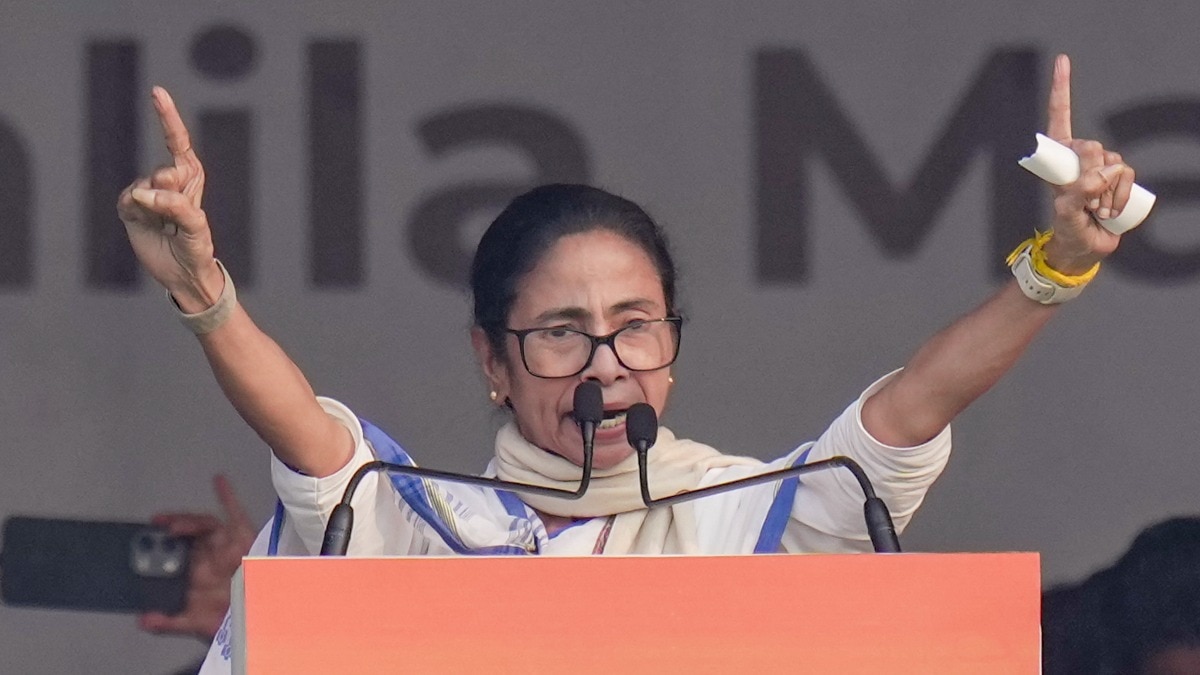
In a sudden change of plans, former West Bengal Chief Minister Mamata Banerjee has decided to travel to Delhi for an INDIA bloc meeting on Sunday. This decision comes ahead of a crucial parliamentary showdown over the Centre's Delimitation Bill, scheduled to be introduced on Monday. The revised Delimitation (Second) Bill, 2026, aims to link the implementation of 33% women's reservation with a redrawing of constituencies and envisages a 50% increase in the strength of the Lok Sabha, taking its maximum strength to 850. The proposed legislative package is expected to remain frozen until 2051.
Banerjee initially chose to stay back in Kolkata due to the alleged attacks on her party leaders and workers in West Bengal. However, messages from several INDIA bloc leaders urging her to attend the national capital prompted her to reconsider. She is scheduled to travel on an Air India flight and will discuss the emerging political situation and coordinate their response to the government's Delimitation Bill agenda during the meeting in Delhi.
The Delimitation Bill assumes particular significance for the Mamata Trinamool Congress, with the voting rights of 20 rebel MPs emerging as a key political flashpoint. These MPs, who were elected on undivided TMC tickets, broke away from the party in June and announced their merger with the Nationalist Citizens Party of India (NCPI). The votes of these MPs could determine whether the government secures the two-thirds majority required to pass the constitutional amendment.
The proposed legislation has exposed differences within the INDIA bloc, with the Nationalist Congress Party (NCP) led by Sharad Pawar announcing its support for the NDA, while the Dravida Munnetra Kazhagam (DMK), another key Opposition constituent, has also declared support for the Delimitation Bill. Banerjee has strongly opposed the proposed legislation, questioning why women's reservation needs to be linked to delimitation when the Women's Reservation Bill has already been passed. She has also accused the Centre of using the issue to push changes with wider political implications.