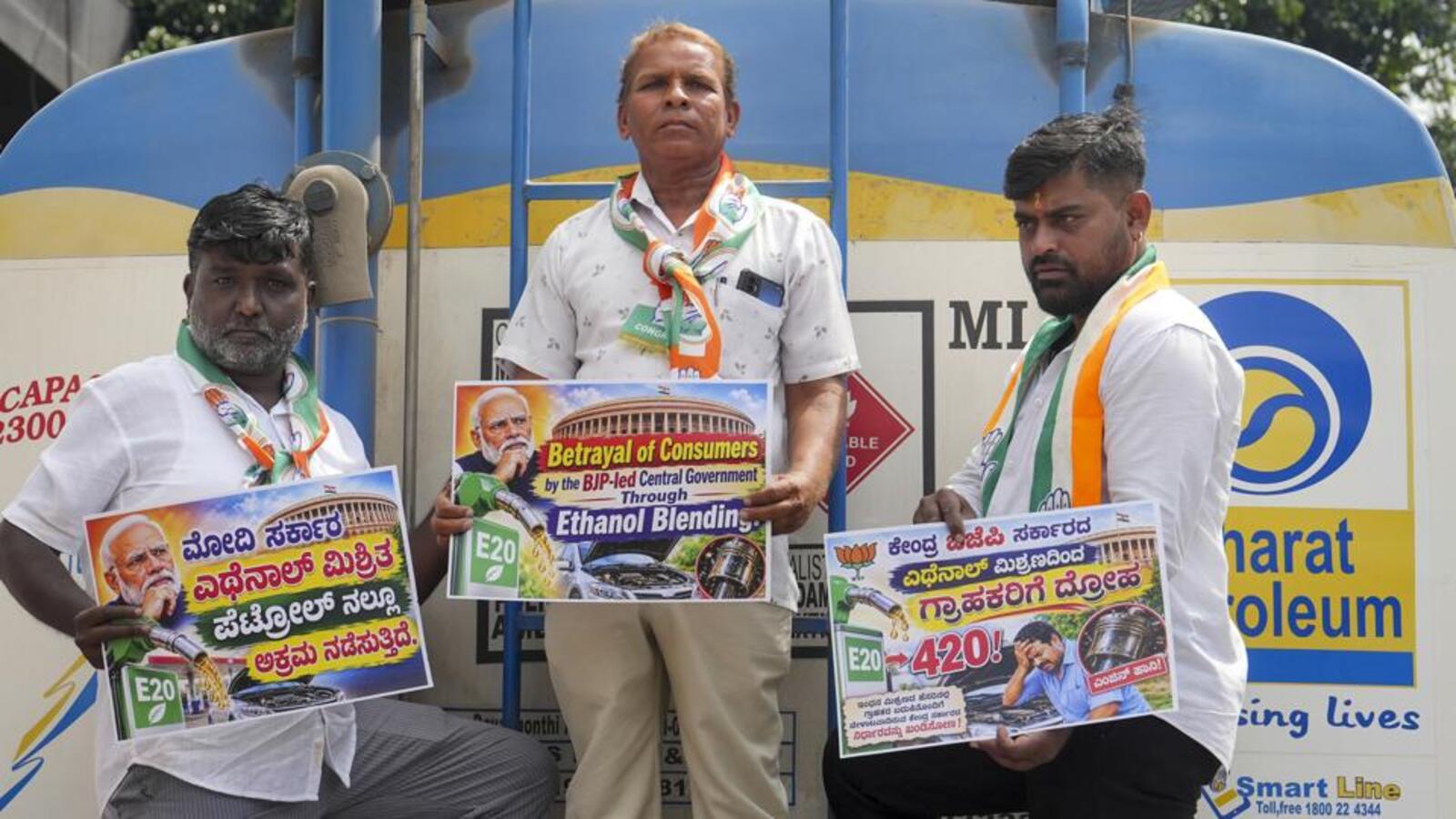
In response to the Centre's inaction on Karnataka's report of alleged excess ethanol blending in petrol, State Food and Civil Supplies Minister Rizwan Arshad has disclosed that the state government is examining legal options. The state government plans to send its comprehensive report, which includes technical details and laboratory test results from six petroleum terminals in Karnataka, to the Union government soon. If the Centre does not take action, the state will consider initiating legal proceedings after seeking legal advice.
The controversy erupted on November 6 when the Karnataka government announced that petrol sold in seven districts contained ethanol concentrations as high as 31.2%, with eleven out of fourteen samples exceeding the 20% blend specified under the Union government’s E20 standard. Samples from Indian Oil Corporation Limited (IOCL), Hindustan Petroleum Corporation Limited (HPCL) and Bharat Petroleum Corporation Limited (BPCL) recorded ethanol levels of 31.2%, 30.5% and 26.5%, respectively.
However, the three Oil Marketing Companies (OMCs) disputed these findings, questioning the government’s sampling procedure, testing methodology, and choice of laboratories. They cited a separate exercise in which 893 samples from 27 states and Union territories, including 56 from Karnataka, were found to contain between 19% and 21% ethanol.
The Karnataka government maintains its stance, asserting that the OMCs failed to provide specific ethanol-blending percentages when initial samples were sent to them. The government then forwarded these samples to laboratories accredited by the National Accreditation Board for Testing and Calibration Laboratories (NABL) and certified under ISO standards.
On November 9, Minister Arshad confirmed that the collection process was documented in the presence of concerned representatives as per the prescribed procedure under the Motor Spirit and High Speed Diesel (Regulation of Supply, Distribution, and Prevention of Malpractices) Order, 2005. He also refuted the OMCs' contention that irregularities could have occurred at individual petrol outlets, stating that ethanol blending occurs at terminals and Karnataka has six such terminals where oil marketing companies blend ethanol.