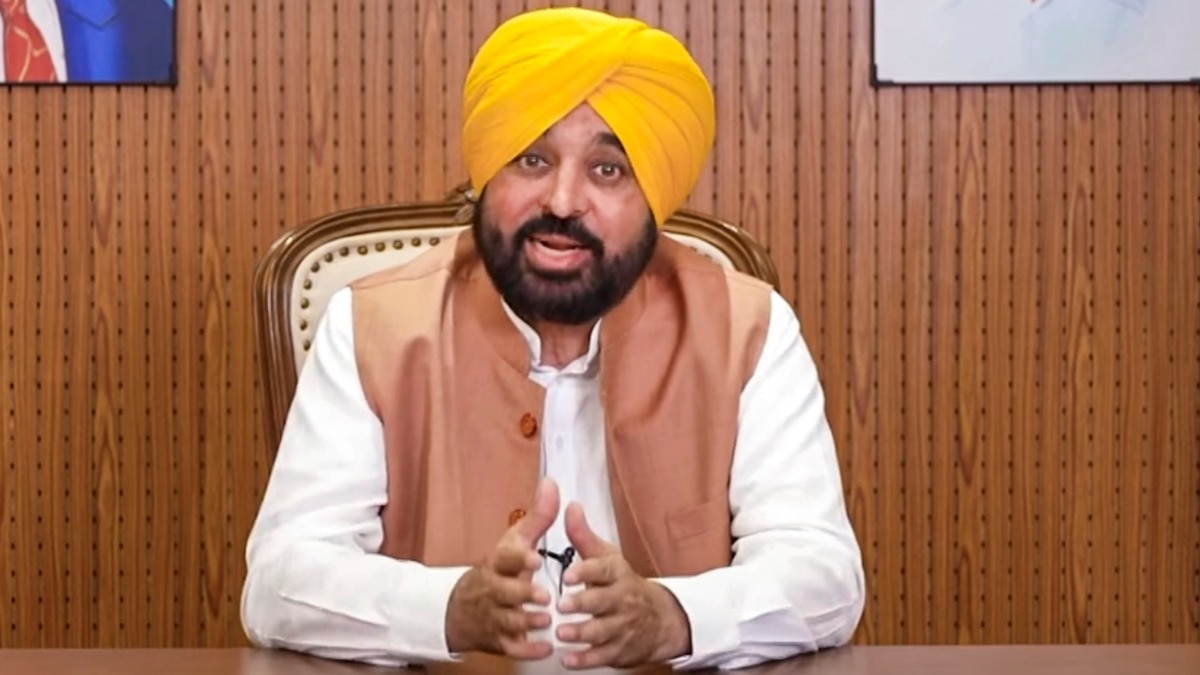
Punjab Chief Minister Bhagwant Mann asserted on Wednesday that the Aam Aadmi Party (AAP) government's major welfare initiatives, including free bus travel, monthly assistance for women, health coverage of Rs 10 lakh, and free electricity, would continue as long as the party remained in power. Speaking during a public interaction program at Donewal in Jalandhar, Mann also criticized the Shiromani Akali Dal (SAD), Congress, and BJP for exploiting Punjab and accused them of backstabbing the state and its people. He claimed that the opposition leaders were colluding to protect each other's interests while in power and that the AAP government had disrupted this arrangement by removing them from power.
Mann further alleged that the drug menace had spread during the tenure of the BJP-SAD alliance, and accused the Akali leadership of patronizing the drug trade. He also claimed that they had taken control of profitable businesses during their rule. Mann criticized the Congress for having no vision for the people and the state and alleged that it was divided and would collapse due to internal conflict. He also stated that former Chief Minister Charanjit Singh Channi's cycle yatra had failed to attract public support. Mann emphasized that the AAP government was using every penny from the state exchequer for public welfare, with people's tax money coming back to them through development, schools, hospitals, and roads.
Punjab Chief Minister Bhagwant Mann accused the Shiromani Akali Dal (SAD), Congress, and BJP of exploiting Punjab and backstabbing the state and its people during a public interaction program at Donewal in Jalandhar on Wednesday. Mann also claimed that opposition leaders were colluding to protect each other's interests while in power, and that the AAP government had disrupted this arrangement by removing them from power. He promised that the major welfare initiatives of the AAP government, including free bus travel, monthly assistance for women, health coverage of Rs 10 lakh, and free electricity, would continue as long as the party remained in power.
Mann further alleged that the drug menace had spread during the tenure of the BJP-SAD alliance, and accused the Akali leadership of patronizing the drug trade. He also claimed that they had taken control of profitable businesses during their rule. Mann criticized the Congress for having no vision for the people and the state and alleged that it was divided and would collapse due to internal conflict. He stated that former Chief Minister Charanjit Singh Channi's cycle yatra had failed to attract public support. Mann emphasized that the AAP government was using every penny from the state exchequer for public welfare, with people's tax money coming back to them through development, schools, hospitals, and roads.
Punjab Chief Minister Bhagwant Mann challenged the Shiromani Akali Dal (SAD), Congress, and BJP over their records in Punjab during a public interaction program at Donewal in Jalandhar on Wednesday. Mann accused these parties of exploiting the state and its resources more mercilessly than the Britishers and promised that the major welfare initiatives of the AAP government, including free bus travel, monthly assistance for women, health coverage of Rs 10 lakh, and free electricity, would continue as long as the party remained in power.
Mann also alleged that the drug menace had spread during the tenure of the BJP-SAD alliance, and accused the Akali leadership of patronizing the drug trade. He claimed that opposition leaders were colluding to protect each other's interests while in power and that the AAP government had disrupted this arrangement by removing them from power. Mann criticized the Congress for having no vision for the people and the state and alleged that it was divided and would collapse due to internal conflict. He stated that former Chief Minister Charanjit Singh Channi's cycle yatra had failed to attract public support. Mann emphasized that the AAP government was using every penny from the state exchequer for public welfare, with people's tax money coming back to them through development, schools, hospitals, and roads.