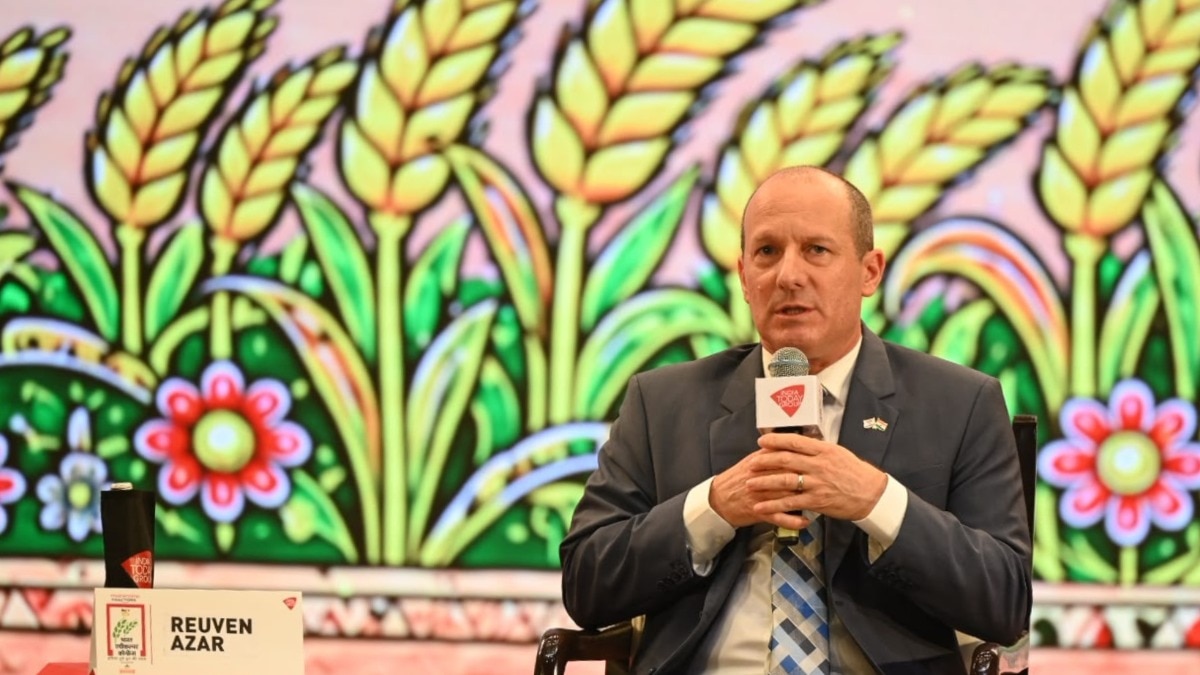
Israeli Ambassador Reuven Azar shared insights on an innovative solution to address the potential conflict between India's growing solar energy expansion and food security concerns at the Kisan Tak Bharat Agriculture Conference held in New Delhi. The proposed solution, known as agrivoltaics, enables farmers to cultivate crops and generate solar electricity simultaneously on the same land. This technology has already shown success in Israel, where more than 50 crops can be grown alongside solar panels. As India's demand for renewable energy, particularly solar power, increases, competition for farmland is expected to intensify, potentially threatening food security in the future. Agrivoltaics could help India strike a balance between energy security and agricultural production while providing farmers with an additional income source.
The Indian government has already initiated steps towards adopting agrivoltaics, with 36 operational projects generating 37.54 MW of electricity as of August 2025. Additionally, a Centre of Excellence for Agrivoltaics was established through the National Institute of Solar Energy and the Indian Agricultural Research Institute, while ten other projects are in the pilot stage. The concern over agricultural land diversion stems from the growing competition between non-conventional energy projects and farmland, with demand for housing and infrastructure projects already causing some diversion. Diversion for renewables could exacerbate this issue.
Spain has faced similar conflicts between agricultural production and solar energy expansion, as evidenced by farmer protests in Andalusia against solar projects that affected thousands of olive trees in 2025. Israel, with its arid climate, scarce water resources, and limited fertile land, has made significant advances in agrivoltaic technology to address land scarcity and the competing demands of agriculture and solar energy generation. Israeli-developed technology has also been tested in other European countries under the EU-funded REGACE project.
In light of India's growing energy requirements and push towards non-conventional and clean sources, Azar warned that expanding solar farms could drive up land prices and encourage farmers to lease their fields for electricity generation instead of cultivating crops, potentially posing a threat to food security in the future. Agrivoltaics offers a solution by allowing both activities to coexist on the same plot, addressing this issue.